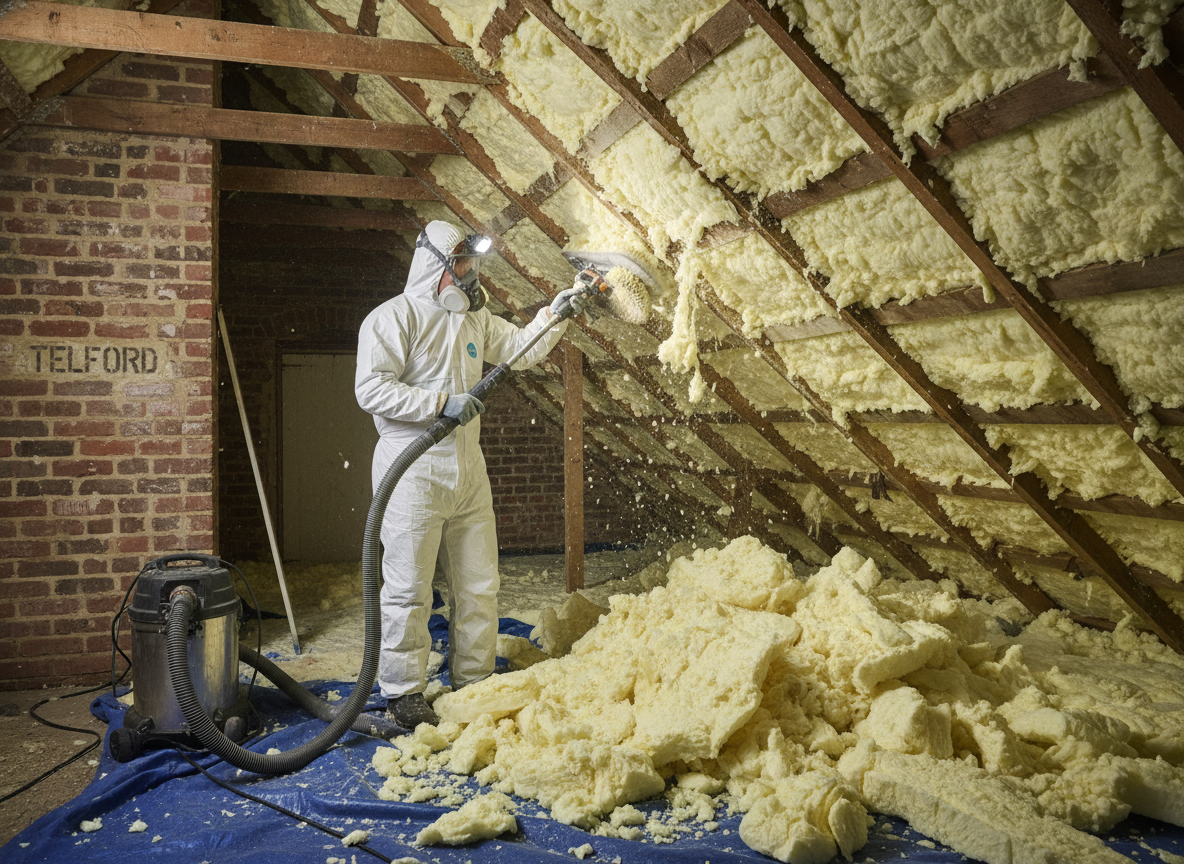
Open cell spray foam bonds tightly to timber joists and felt in Telford’s post-war housing stock, especially the 1960s and 1970s semis common around Halesfield and Dawley. Removing it requires careful mechanical scraping and vacuum extraction to avoid tearing original roof timbers that have already been stressed by decades of Shropshire rain. Homeowners often discover the foam has absorbed water during wet winters, turning the material heavier and more fibrous than expected.
Edge cases arise when foam was sprayed over electrical cables or into eaves that lack proper ventilation. In these situations the removal process must include tracing and protecting wiring while maintaining airflow to prevent future condensation on the roof deck. Working from 10 Halesfield Rd lets us reach jobs across Telford quickly, which matters when sudden leaks appear during prolonged wet spells typical of the county.
Regulation notes include checking that any remaining insulation meets current Building Regulations after removal. We always leave the roof space clean enough for inspection, because loft insulation upgrades are frequently required once the foam is gone. The 24/7 availability from our Halesfield base means we can respond the same day when water ingress is reported.
Seasonal Considerations
Shropshire’s frequent autumn and winter rainfall makes open cell foam removal slower in colder months because the material stays damp longer. Summer jobs move faster but require extra dust control to protect nearby gardens in dense terraced streets.
Technician insight
In Telford, the thing that catches most people out with open cell spray foam removal is how the wet Shropshire climate leaves foam saturated inside 1970s roof voids around Madeley and Dawley, so it pulls away in heavy clumps instead of clean sheets and adds extra weight to already old ceiling joists.
Open Cell Foam Removal in a Halesfield Semi
Homeowner reported musty smell and water staining on ceilings after heavy winter rain. We found open cell foam had wicked moisture across the full loft depth in the 1970s semi. Mechanical scraping and vacuum extraction cleared the saturated material without disturbing original timbers. New ventilation was added and the loft was left ready for fresh insulation.
How it works
- 1
Site Assessment
Inspect roof void access, moisture levels and any wiring or pipework embedded in the foam.
- 2
Containment Setup
Seal off the work area with sheeting and negative air to keep dust from entering living spaces.
- 3
Foam Extraction
Use handheld scrapers and industrial vacuums to remove open cell foam without damaging joists or felt.
- 4
Final Clean and Ventilation Check
Remove all residue, inspect for hidden damp and confirm airflow meets post-removal standards.
Pricing
Cost depends on roof access, depth of foam and whether moisture has made the material heavier; quotes provided after inspection.